


Over the past few years, decentralized finance usually called DeFi has started changing the way people think about money, banking and digital assets. Instead of relying on banks or any financial institutions; DeFi platforms use blockchain technology and smart contracts to let the users lend, borrow, trade and earn interest directly with each other. It sounds a bit futuristic at first but honestly, many of these platforms are already being used by millions of people around the world.
Because of this rapid growth, businesses and a startups are now exploring DeFi platform development as a serious opportunity. Building a DeFi platform isn’t just about launching a token or writing a few smart contracts; though. It usually involves designing secure blockchain infrastructure, choosing the right technology stack and making sure users can interact with the platform safely and easily.
In this guide, we’ll walk through how DeFi platforms are developed, the technologies behind them and what businesses should consider before starting a DeFi project. If you’re curious about how these systems actually work behind the scenes; this should give you a pretty clear starting point.
What is DeFi Platform Development?
DeFi platform development is the process of designing and building decentralized financial systems using blockchain technology. It involves creating smart contracts, decentralized applications (dApps) and backend infrastructure that allows user to access the financial services directly through blockchain. Instead of fully relying on centralized institutions to manage transactions; these platforms operate through automated protocols that execute rules which is written into code.
In real world use, DeFi platforms power many services that are already widely used in crypto ecosystem. For example, DeFi yield farming allow users to earn rewards by providing liquidity while decentralized exchange development enables peer-to-peer crypto trading without centralized exchanges. Similarly, DeFi lending platforms, staking platforms and even experimental concepts like DeFi lotteries are expanding how people interacts with the digital assets in a decentralized financial environment.
What Are the Essential Features and Components of a Modern DeFi Platform?
A successful DeFi platform isn’t just about launching a smart contract and hoping people use it. Modern platforms combine multiple systems such as security layers, liquidity mechanisms and user-friendly interfaces to create a reliable financial environment.
- Secure Smart Contract Architecture: Smart contracts act like the backbone of DeFi platforms because they automatically handle transactions and financial logics. Since bugs can cause serious losses; developers usually test and audit code carefully before launching anything publicly.
- Unified Asset Management Interfaces: Users usually prefer seeing all their digital assets in one simple dashboard instead of jumping between multiple tools. A clean interface connected with Web3 wallets makes managing crypto holdings feel more natural and less confusing.
- Native Utility and Governance Tokens: Many DeFi platforms create their own tokens to reward users and power platform activities. These tokens can be used for paying fees, earning rewards or even participating in voting decision about platform upgrades.
- Integrated Liquidity and Staking Pools: Liquidity pools help keeps trading and lending services running without interruptions. Users who provide liquidity can earn passive rewards which also help to attract more capital into the platform.
- Cross-Chain Compatibility and Asset Bridges: Since crypto users often hold assets on different blockchains; cross-chain support is becoming almost necessary. Asset bridges help move tokens between networks so users can enjoy more flexibility.
- Decentralized Identity (DID) Integration: Decentralized identity systems helps to verify user while still keeping personal data more private. This balance between privacy and a verification is becoming important as regulations and security expectations grows.
Why Invest in DeFi Platform Development? (Core Benefits)
DeFi is not just another blockchain trend it’s gradually changing how digital financial systems are designed and used. For startups, fintech companies and even a traditional businesses, investing in DeFi platform development can open doors to new markets, innovative services and global users.
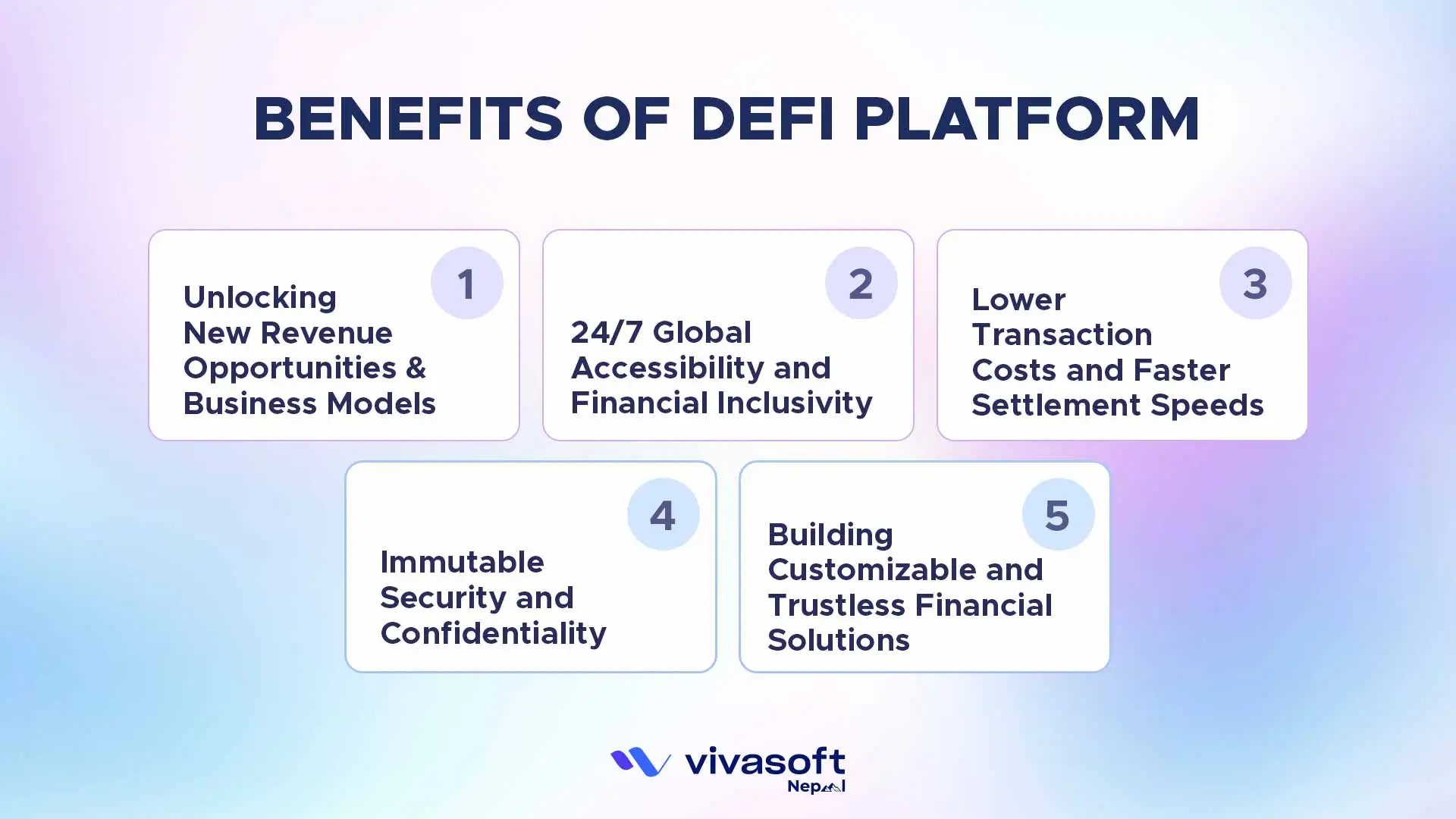
Unlocking New Revenue Opportunities & Business Models
One of the biggest reasons companies explore DeFi is the opportunity to create entirely new financial models. Platforms can generate revenue through transaction fees, staking services, liquidity pools, or token ecosystems.
For example, businesses building DeFi lending platforms, DeFi staking platforms, or decentralized exchange development solutions can earn from protocol fees while users continue interacting with the system.
24/7 Global Accessibility and Financial Inclusivity
Traditional financial systems usually depend on working hours, geographic restrictions or banking regulations. DeFi platforms on the other hand, run on blockchain networks that operate continuously.
This means users from different parts of the world can access financial services anytime, whether they want to trade assets, participate in DeFi yield farming or earn rewards through staking.
Lower Transaction Costs and Faster Settlement Speeds
Because DeFi platforms remove many intermediaries, transactions often become faster and more efficient. Instead of waiting for banks or clearing systems, transfers can happen almost instantly through blockchain protocols.
In many cases, this also reduces operational costs, especially when compared to traditional financial systems that involve multiple verification layers.
Immutable Security and Confidentiality
Blockchain technology brings a strong layer of transparency and security to financial platforms. Once transactions are recorded on the blockchain; they cannot easily be changed or a manipulated.
Combined with secure DeFi smart contracts development, this creates a financial system where rules are enforced automatically and users can trust the protocol itself.
Building Customizable and Trustless Financial Solutions
Another interesting advantage of DeFi is flexibility. Developers can design custom financial products such as DeFi insurance, DeFi lotteries or specialized investment protocols depending on the market need.
Since, these systems are built on open blockchain networks; they can also integrate with other decentralized applications, creating a larger and more connected financial ecosystem.
What Are the Most Profitable Types of DeFi Platforms You Can Build?
The DeFi space is growing fast and not every platform idea is equally profitable. Some models attract more users while others focus more on long term institutional adoption or ecosystem expansion. Choosing the right type of platform usually depends on your target audience, budget and a technical goals.
| Platform Type | Target Audience | Key Advantage |
|---|---|---|
| Full-Stack DeFi Platforms | Crypto users & traders | All-in-one financial services |
| White-Label Platforms | Startups | Faster market launch |
| Enterprise / Institutional Platforms | Banks & corporations | Compliance-focused security |
| Cross-Chain Platforms | Multi-chain users | Better asset mobility |
| Hybrid Finance (HyFi) Platforms | Traditional + crypto users | Regulatory flexibility |
| Layer-2 Platforms | High-volume users | Faster and cheaper transactions |
Full-Stack DeFi Platforms
Full-stack DeFi platforms are complete ecosystems that combine trading, lending, staking, and other financial services in one place. These platforms usually require strong DeFi lending platform development capabilities because they handle complex financial workflows.
They are popular among users who want everything in one application and businesses can earn revenue from multiple service layers instead of relying on just one feature. Example services often include decentralized exchanges, lending pools and yield farming modules working together inside the one platform.
White-Label Platforms
White-label DeFi platforms are like ready made solutions that companies can customize and launch quickly. Instead of building everything from scratch; businesses can tweak branding, token models and interface design.
This option is usually attractive for a startups that want to enter the market fast without spending years on development.
Enterprise / Institutional Platforms
These platforms are designed for banks, investment firms or a large financial organizations that want to explore blockchain technology. They usually focus more on compliance, security and controlled access rather than public trading features.
Enterprise DeFi adoption is growing slowly but steadily as traditional finance begins experimenting with the blockchain systems.
Cross-Chain Platforms
Cross-chain platforms focus on connecting multiple blockchain networks together. Users can move assets across chains without manually switching networks or using complicated tools.
This type of platform is becoming more important as the blockchain ecosystem continues expanding into the different protocols.
Hybrid Finance (HyFi) Platforms
Hybrid finance platforms combine traditional financial services with decentralized blockchain technology. They try to balance regulatory requirements with the transparency and automation of DeFi systems.
Many businesses like this model because it allows them to serve both crypto users and traditional financial customers.
Layer-2 (L2) Specific Platforms
Layer-2 platforms are built on top of existing blockchains to improve speed and reduce transaction costs. They are especially useful for high-frequency trading or a gaming based financial applications.
As blockchain adoption grows, Layer-2 focused DeFi solutions are becoming more practical for large-scale user activity.
How is a DeFi Platform Developed?
Building a DeFi platform is not something that happen overnight. It usually take careful planning, strong technical architecture and a continuous testing before everything is ready for real users. Most successful projects follow a structured development process to avoids costly mistakes later.
Step 1: Product Discovery and Feasibility Analysis
The first thing development teams usually do is figure out what problem they are trying to solve in the market. This means researching competitors, understanding user behavior and deciding whether the platform will focus on trading, lending or a other financial services.
At the same time, teams design a realistic business model. Some platforms rely on transaction fees while others use token-based economies to generate revenue and keeps the ecosystem active.
Step 2: Architecture, Blockchain Selection, and Infrastructure Planning
Choosing a blockchain is like choosing the foundation of a building , if the foundation is weak then everything built on top can suffer later. Developers compare networks based on speed, cost, security and community support before making a final decision.
| Blockchain / Layer | Consensus Mode | Average TPS | Typical Gas Fees |
|---|---|---|---|
| Ethereum (Layer 1) | Proof of Stake | Average TPS | Usually higher during congestion |
| Solana | Hybrid PoH + PoS | Very high | Very low |
| Polygon (Layer 2) | PoS Sidechain | High | Low |
| Arbitrum / Optimism | Rollup Technology | High | Low to moderate |
Besides blockchain selection, teams also choose hosting infrastructure, cloud services, and scaling strategies because DeFi platforms can grow very quickly if they become popular.
Step 3: Back-End and DeFi Smart Contracts Development
Smart contract development is basically the heart of any DeFi platform. These contracts handle transactions, rewards, staking logic and lending operations automatically without any human intervention.
Developers usually write smart contracts carefully, test them repeatedly and sometimes even use external decentralized oracle services to fetch the real world data like token prices or market rates. This is important for things like automated trading and lending calculations. Proper DeFi smart contracts development can significantly reduce risks of financial errors or hacks.
Step 4: User-Centric Frontend and dApp Software Development
Even though DeFi runs on complex blockchain technology; users should not feel like they are using something complicated. That is why frontend development focuses heavily on simplicity and a clarity.
Wallet integration allow users to connect their crypto wallets and sign transactions securely without sharing private keys. Good design usually includes portfolio tracking, staking reward views and easy navigation menus to helps beginners feel comfortable using the platform.
Step 5: Security Auditing and Compliance Integration
Security is probably one of the most serious parts of DeFi platform development because financial assets are involved. Teams normally hire third-party auditors to check smart contract code for vulnerabilities before launching publicly.
Compliance tools are also sometimes added; especially if the platform plans to operate in regulated markets. KYC and AML verification systems helps platforms meet the legal requirements while still trying to stay decentralized where possible.
Step 6: Testnet Simulation, Iteration, and QA
Before real users interact with the platform, developers deploy it on testnet environments. Here they simulate real trading activity, stress test servers, and check how smart contracts behave under heavy usage.
Testing is repeated several times because even small bugs can cause big financial problems once the platform is live. QA teams usually work closely with developers during this stage to fix issues quickly.
Step 7: Mainnet Launch and Ecosystem Marketing
Launching on the main blockchain network is exciting but it is not the final step. Platforms need active marketing, partnerships and a community growth strategies to attract users.
Many DeFi projects work with the crypto communities, content creators and blockchain events to build a trust and visibility in a market.
Step 8: Post-Launch Support and Liquidity Sourcing
After launch, development work does not stop. Platforms need regular updates, bug fixes and performance optimization as user traffic increases.
Liquidity management is also important because DeFi services depends on the users depositing assets into pools for trading and lending operations. Without enough liquidity; even a well designed platforms can struggle to stay competitive.
7 Crucial Strategies for Successful DeFi Platform Development
Creating a successful DeFi platform is not just about coding smart contracts and launching an app. The real challenge is building something users can trust and keep using over the time.
- Adopting a Security-First Development Approach: Security is critical because DeFi platforms manage real financial assets and transactions. Regular audits and vulnerability testing help reduce risks and protect user funds.
- Designing Effective and Sustainable Tokenomics: Tokenomics controls how a platform’s token is distributed, rewarded, and managed over time. Good token design helps maintain user interest and supports long-term platform growth.
- Optimizing Liquidity Management from Day One: Liquidity keeps trading and lending services working smoothly for users. Reward incentives are often used to attract liquidity providers into the ecosystem.
- Pre-Planning for Regulatory Compliance: Compliance planning helps platforms avoid legal issues when expanding to different regions. Early preparation makes global scaling much easier later.
- Ensuring Highly Scalable Technical Architectures: Scalable systems help platforms handle sudden growth in users and transactions. Cloud infrastructure and optimized blockchain design help maintain performance.
- Implementing DAO and Governance Mechanisms: DAO governance allows the community to vote on platform upgrades and decisions. This helps build trust between developers and users.
- Fostering Community Building and Ecosystem Development: Strong communities help spread awareness and attract more users. Engagement campaigns and rewards programs are often used to grow the ecosystem.
Cost and Timeline for Developing a DeFi Platform
The cost and time required to build a DeFi platform can vary a lot depending on how complex the platform is and what features you want to include. Some simple platforms can be built in a few months while advanced ecosystems with cross-chain features and strong security layers can take much longer. In general, good quality DeFi development is not something that should be rushed because security and stability matter more than speed.
| Platform Complexity | Estimated Development Time | Estimated Cost Range |
|---|---|---|
| Basic (MVP) | 2 – 5 months | $25,000 – $80,000+ |
| Medium Complexity | 5 – 7 months | $65,000 – $200,000+ |
| High Complexity | 8+ months | $150,000 – $500,000+ |
Key Factors Influencing Cost
The cost of building a DeFi platform depends on a few main factors. Each decision from blockchain selection to team size can affect both how long development takes and how much it ultimately costs.
- Blockchain Choice: The blockchain network you choose can affect both cost and development difficulty. Some blockchains are easier to work with because of large developer communities, while others require more specialized knowledge.
- Complexity Level: Adding advanced features like cross-chain bridges, advanced trading algorithms or DeFi insurance systems increases development time and overall cost. Simpler platforms usually cost less but may have limited functionality.
- Security Measures: Security auditing, penetration testing and code verification can increase expenses but are very necessary for protecting user funds. Skipping security steps to save money can sometimes cause bigger financial problems later.
- Team and Design: Development teams usually include blockchain developers, UI designers, QA testers and project managers. Hiring experienced professionals may cost more but it usually results in a more stable product.
- Infrastructure Costs: Hosting services, cloud storage and network infrastructure also add to total expenses. As user traffic grows, infrastructure needs usually become stronger and more expensive to maintain.
The Technology Stack for DeFi Platform Development
The technology stack is basically the backbone of a DeFi platform. Choosing the right tools helps make development smoother and keeps the system fast, secure and scalable as users grow.
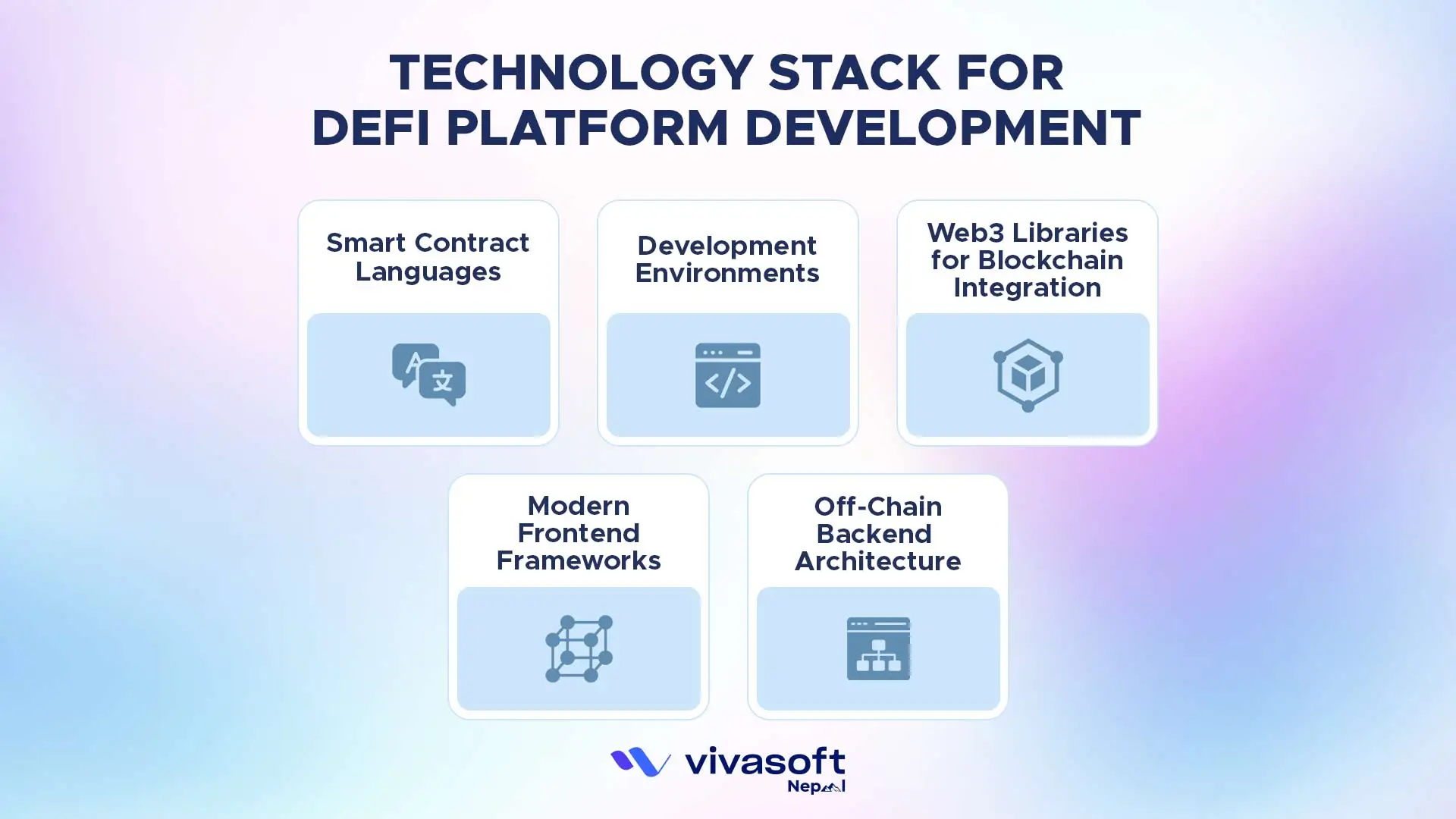
| Architecture Layer | Recommended Tools & Technologies | Primary Use Case |
|---|---|---|
| Smart Contracts | Solidity, Rust, Move | Used to write the core financial logic that automatically executes transactions and protocol rules. |
| Development Environments | Hardhat, Truffle, Foundry, Remix | Helps developers write, test and deploy smart contracts before launching to live networks. |
| Web3 Libraries | Web3.js, Ethers.js, viem | Connects frontend applications with blockchain networks and enables wallet and transaction interactions. |
| Frontend Frameworks | React.js, Next.js, Vue.js | Used to build user interfaces like dashboards, trading panels and portfolio trackers. |
| Off-Chain / Backend | Node.js, Python, PostgreSQL, AWS | Manages user data, analytics, server logic and cloud hosting infrastructure. |
Each layer works together to make the platform functional. Developers usually mix different tools depending on the project goals, security needs and performance expectations.
Smart Contract Languages
Smart contract languages are the foundation for any DeFi platform. They let you program rules for transactions, staking, lending and more, without needing a central authority.
- Solidity: It is the most common language for Ethereum-based platforms. It’s popular because a lot of developers know it and there are tons of tutorials and resources to learn from.
- Rust: It is famous for being fast and safe, so blockchains that need high performance often use it. It’s stricter than Solidity but helps avoid bugs that could cost users money.
- Move: It is newer and focuses on safely managing digital assets. Developers like it because it reduces common mistakes in handling tokens and transactions.
Development Environments
Development environments are like your workshop where you can safely test and tweak your smart contracts before going live. They make it easier to catch errors and debug issues.
- Hardhat: It is great for testing contracts locally before deploying them. Developers can simulate transactions and see how contracts behave in different scenarios.
- Truffle: It provides a structured framework to build, test and deploy smart contracts. It’s helpful for larger projects because it keeps everything organized.
- Foundry: It is fast and ideal for advanced testing of complex contracts. Developers like it because it can run multiple tests quickly and efficiently.
Web3 Libraries for Blockchain Integration
Web3 libraries connect your frontend interface with the blockchain, making everything interactive for users. Without them, users can’t send transactions or interact with smart contracts.
- Web3.js: Web3.js is widely used to connect JavaScript apps with blockchain networks. It lets users sign transactions and view blockchain data right in their browser.
- Ethers.js: Ethers.js is lighter and easier to use for wallet integrations and transaction management. It’s becoming very popular because it’s simpler for small projects and fast to implement.
Modern Frontend Frameworks
Frontend frameworks help build the parts of the platform users actually see and interact with. Clean, intuitive design is really important because blockchain can feel confusing to new users.
- React: It is popular for building dashboards, trading interfaces and portfolio trackers. Its component-based design makes it flexible and easier to manage as platforms grow.
- Next.js: It adds server-side rendering which improves performance and SEO for DeFi websites. It’s especially helpful for platforms that want smoother page loads.
- Vue.js: Vue is simple and flexible, often preferred by smaller teams. It’s easier to learn and quick to implement for lightweight apps.
Off-Chain Backend Architecture
Even though DeFi is decentralized, some things like analytics, user data and notifications happen off-chain. The backend ensures the platform runs efficiently behind the scenes.
- Node.js: Node.js is used to build scalable backend services for processing requests quickly. It’s especially good for handling lots of simultaneous users.
- PostgreSQL: It stores structured data like user activity logs, transaction histories and analytics. It helps keep track of important information safely.
- AWS: It provides cloud hosting and server management. It allows the platform to scale as more users join without crashing or slowing down.
How to Choose the Right DeFi Platform Development Company
Choosing the right development company can make or break a DeFi project because technology, security and user trust all matter equally. A good partner should understand blockchain development, business goals and long-term scalability rather than just delivering code quickly.
Evaluating Portfolio and Multi-Chain Experience
Checking a company’s previous work helps you understand their real technical strength and creativity. Look for projects that show experience across different blockchains and DeFi protocols.
Reviewing portfolios from established DeFi development companies can also help you compare technical expertise, client feedback, and the types of projects they’ve successfully delivered.
Assessing Security Standards and Transparency
Security certifications and transparent development practices are very important in DeFi because financial assets are involved. Companies that follow strict testing and audit standards usually provide safer solutions. Always check whether the company openly shares its development process and security testing methods.
Why Choose Vivasoft Nepal for DeFi Development?
Choosing the right development partner is just as important as having a good project idea. You want a team that understands blockchain technology, focuses on security and also communicates clearly throughout the development journey. Vivasoft Nepal aims to provide all of these through secure, scalable and business-focused DeFi solutions that grow along with your platform.
If you are planning to build a DeFi product, whether it is a lending platform, staking system or decentralized exchange, you can explore their DeFi service offerings to see how they approach development, security and long-term platform support. Reaching out for consultation can also help you turn your idea into a working blockchain product without getting lost in technical complexity.
Frequently Asked Questions (FAQ)
How does DeFi differ from Open Banking?
DeFi is fully decentralized and runs on blockchain networks, while open banking still relies on traditional financial institutions sharing data through APIs. DeFi gives users more control over their assets but open banking is usually easier to regulate and integrate with existing banks.
What is the most popular blockchain for DeFi development?
Ethereum is still one of the most popular choices because of its huge developer community and ecosystem support. However, faster and cheaper networks are becoming more popular as DeFi usage keeps growing.
How do you ensure the security of a new DeFi platform?
Security is handled through smart contract audits, penetration testing and continuous monitoring of platform activity. Many teams also follow secure coding practices to reduce vulnerabilities during development.
How long does it take to develop a DeFi platform?
Development time depends on platform complexity. Simple platforms may take a few months while advanced DeFi ecosystems with cross-chain and advanced trading features can take a year or more.
Can I customize a white-label DeFi platform?
Yes, white-label platforms are usually designed for customization. Businesses can change branding, token models and interface designs to match their own goals.
What security measures are essential for DeFi platforms?
Regular code audits, strong encryption, secure wallet integrations and proper testing environments are all important. Security should always stay as a continuous process, not just a one-time step.