


Key Takeaways
- DeFi Ecosystem: Solana is an ideal for scalable finance due to high throughput, near-instant finality, and fraction of a cent fees.
- Rapid adoption [2025]: Driven over $1.5 trillion in DEX trading volume and exceeded $15 billion in stablecoin supply.
- Complex Technical Requirements: Building requires deep expertise in Rust, Anchor framework, PDAs, and cross-program invocations to prevent costly mistakes.
- Development Partner Selection: Success depends on level of experienced development teams with proven mainnet deployments and strict security practices.
- End-to-End Support: Top firms reduce risk, speed up time-to-market, and ensure protocols are secure, scalable, and resilient.
If you’ve been watching what’s happening in blockchain over the past couple of years, you already know; Solana isn’t just another chain competing for attention. It’s genuinely changed how developers think about building decentralized finance apps. With sub-second finality, transaction fees that rarely exceed a cent even during peak usage and developer ecosystem that has matured faster than most expected, Solana has set a new standard.
But speed and low fees are only part of the story. Building production-grade DeFi on Solana is genuinely challenging. Rust-based programming, the Anchor framework, cross-program invocation patterns, PDA validation, and compute unit optimization are not concepts you master over a weekend. Mistakes can lead to exploits, failed transactions at scale, or protocols that work on devnet but break under real liquidity conditions.
That’s why choosing the right development partner matters. You need more than a company that “does blockchain” or can spin up a Solana node. You need a team with proven experience shipping real programs, a deep understanding of Solana’s ecosystem-specific nuances and the ability to make smart architectural decisions before a single line of Rust is written.
This list was created with those standards in mind. We evaluated companies based on technical expertise in the Solana ecosystem, portfolio evidence, security practices, and their approach to full-cycle development from protocol design to post-launch support.
Key Evaluation Criteria of Top 10 Solana DeFi App Development Companies
Choosing a Solana DeFi development partner isn’t like hiring a regular web agency. The wrong choice can mean a protocol that fails under load, a smart contract with vulnerabilities or a project that never leaves devnet. Here’s how we approached it:
- Technical Expertise in Solana Ecosystem: We focused on teams with strong Rust skills and hands-on experience with the Anchor framework. A deep understanding of Solana specific feature like Proof of History, Sealevel parallel execution and the account model was essential; familiarity with Ethereum alone wasn’t enough.
- Proven Portfolio and Industry Experience: Mainnet deployments mattered most. We prioritized companies that have delivered real DEXs, lending platforms or staking systems capable of handling live transactions and user funds. Projects limited to demos or hackathon builds didn’t make the cut.
- Strong Security & Auditing Practices: Security was a critical factor. Companies that routinely conduct smart contract audits, validate PDAs, run reentrancy testing and optimize compute units scored highly. Teams with established connections to trusted third-party auditors were even more credible.
- DeFi Protocol Development Skills: We looked at actual experience in building AMMs, lending/borrowing mechanics, yield curves and liquidation logic. Understanding the concepts wasn’t enough; practical implementation was key.
- Client Feedback and Reputation: Reviews, case studies and references gave insight into how team handle challenges, deadlines and unexpected issue. Companies with track record of solving problems effectively stood out more than those with only success stories.
- Development Process and Methodology: Agile workflows, clear milestones, and a clear devnet to testnet to mainnet process showed us which teams could deliver efficiently. Transparent communication throughout the process was another important factor.
- Post-Launch Support and Maintenance: DeFi apps evolve constantly. We considered the teams ability to provide monitoring, updates, security patches and program migrations after launch.
- Cost Structure and Engagement Model: We also examined rates, minimum project sizes and engagement styles. It was important that the model; whether fixed scope, time-and-materials or dedicated team; fit typical project needs and budgets.
List of Top 10 Leading Solana DeFi App Development Companies: A Quick Overview
Here’s a quick look at the top 10 DeFi app development companies in this guide, showcasing their distinct strengths and industries served.
| S.N | Company | Specialization | Industries Served |
|---|---|---|---|
| 1 | Vivasoft Nepal | Solana DeFi app development for startups and enterprises, blockchain & DeFi development, smart contracts, dApps | Finance & Fintech, Web3 startups, enterprises, Healthcare, eCommerce & Retail |
| 2 | LimeChain | Blockchain & protocol engineering, zero knowledge (ZK) tech & rollups, decentralized application (dApp), deFi product development | Decentralized Finance (DeFi), gaming, e‑commerce, enterprise solutions |
| 3 | Rapid Innovation | Solana development, smart contracts, dApps, DeFi apps | Banking & financial services, healthcare & life sciences, marketing & media, retail & e‑commerce |
| 4 | Trioangle | Blockchain & web3 development (dapps, defi, staking), wallet integration & wallet development, smart contract development | Real estate, healthcare, gaming, insurance |
| 5 | RevInfotech | Defi platform development (dao, staking, lending, etc.), defi wallet development, defi token development, decentralized crypto banking platform development | Fintech & banking, manufacturing, real estate, healthcare |
| 6 | Metlabs | Rwa (real world asset) tokenization, blockchain consulting, dapp (decentralized application) development | Real estate, decentralized finance (defi), entertainment & gaming, enterprise blockchain solutions |
| 7 | QuickNode | Solana & monad validators, blockchain data marketplace add‑ons (defi, wallets, nfts, mev & gas tooling) | Decentralized finance (defi), gaming (web3 & blockchain games), trading & exchanges, wallets & wallet services |
| 8 | Blockchain App Factory | Solana DeFi development, dApps, DEX, staking, token dev | DeFi, crypto platforms, Real Estate, Fintech & Banking |
| 9 | Antier Solutions | Blockchain & dApps development | Government, cloud services, enterprise, BFSI |
| 10 | Innowise | Solana DeFi, wallets, smart contracts, NFT platforms | Finance, enterprise, Real estate, Gaming, Education |
In Depth Analysis of Top 10 Solana DeFi App Development Companies
Explore the top 10 Solana DeFi app companies, renowned for their individual expertise and innovative approaches.
1. Vivasoft Nepal
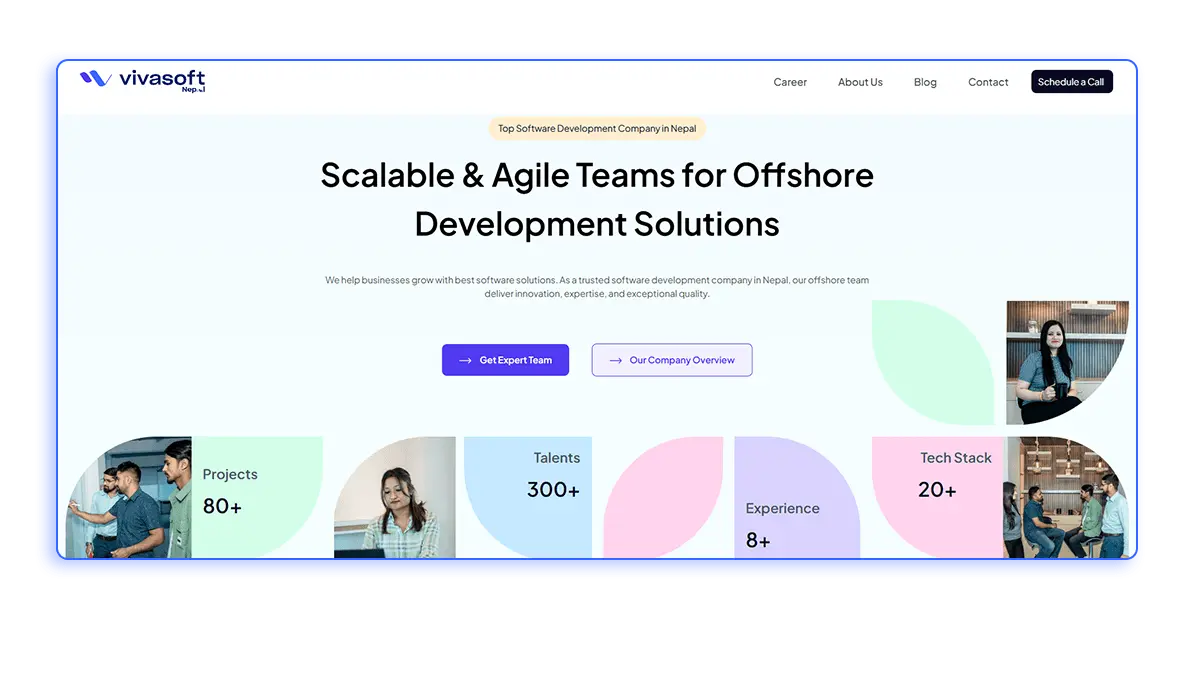
With a proven delivery track record since 2016 and deep protocol skills, Vivasoft Nepal brings strong technical depth to custom solana DeFi app development. They offer blockchain smart contract development, DeFi architecture, and full-stack Web3 builds under one roof.
You get 50+ engineers who plan the architecture before writing code, helping you avoid costly mistakes early. Their AI/ML and backend capabilities make them a strong fit if your protocol needs more than just on-chain logic.
A Quick Look at Vivasoft Nepal
- Inception: 2016
- Hourly Rate: USD $25 – USD $49/hr
- Minimum Project Size: USD $50,000+
- Review: 5.0 (Clutch)
- Website: vivasoft.com.np
- Location: K G tower, 9th floor, Lazimpat, Kathmandu Nepal
Key Services
- Solana DeFi App Development
- DeFi Protocol Development
- SPL Token & Governance Token Creation
- Wallet Integration & Transaction Management
- Blockchain Consulting and Development
2. LimeChain
Recognized as a top Solana DeFi development firm, LimeChain has built actual tools for the Solana Foundation; a program debugger and code testing tool used across the ecosystem. That alone tells you their depth goes beyond what typical service firms offer.
Their project work backs it up. On the Altitude lending aggregator, they built 80+ smart contracts with automated loan management running across multiple live protocols. For technically serious builds, LimeChain deserves an early spot on your shortlist.
A Quick Look at LimeChain
- Inception: 2017
- Hourly Rate: USD $50 – USD $99/hr
- Minimum Project Size: USD $5,000+
- Review: 4.9 (Clutch)
- Website: limechain.tech
- Location: g.k. Iztok, bul. “Dragan Tsankov” 23a, 1113 Sofia, Bulgaria
Key Services
- Solana Smart Contract & Program Development
- Solana dApp Development
- SPL Token & Governance Token Development
- DAO & Governance Infrastructure
- Blockchain Consulting & Protocol Engineering
3. Rapid Innovation

With 200+ solutions delivered and experience working alongside 20+ global fintech companies, Rapid Innovation brings real weight to Solana DeFi protocol development. Their team covers DEX builds, token creation, smart contract auditing, and wallet development all in one place.
Clients consistently mention that the CEO joins early project calls, not just the pitch. That leads to smarter decisions upfront. Their in-house AI capabilities are also useful for teams wanting data tools or automation built directly into the product.
A Quick Look at Rapid Innovation
- Inception: 2019
- Hourly Rate: USD $100 – USD $149 / hr
- Minimum Project Size: USD $25,000+
- Review: 0 Clutch reviews
- Website: rapidinnovation.io
- Location: 2785 W Seltice Way Suite A, Post Falls, ID 83854, United States
Key Services
- Smart Contract Development & Audit
- Solana dApp Development
- SPL Token & Governance Token Development
- DeFi Platform Development
- Blockchain Consulting & Integration
4. Trioangle
Built around Solana’s strengths of fast transactions, low fees and quick confirmation times; Trioangle has carved out a clear identity as a Solana decentralized finance development agency for startups and crypto platforms looking for solid, budget friendly delivery.
They may not be the loudest name here, but their Solana specific work shows genuine investment in the ecosystem. For mid-sized DeFi builds where keeping costs under control matters just as much as quality, Trioangle is worth a real conversation.
A Quick Look at Trioangle
- Inception: 2016
- Hourly Rate: USD $25 – USD $49/hr
- Minimum Project Size: USD $10,000+
- Review: 0 Clutch reviews
- Website: trioangle.com
- Location: No 12/9, Santhosh Raj Plaza,3rd Floor, Subburaman Street, Gandhi Nagar, Madurai, Tamil Nadu 625020, India
Key Services
- DeFi Consultation Services
- Token Development Services
- Crypto Wallet Development
- DeFi dApp & Platform Development
- Solana-Based Smart Contract Development
5. RevInfotech
Serving 800+ clients globally with 120+ experts, RevInfotech has built a strong name as a Solana blockchain DeFi developer that stays with you through the entire build not just the contract writing phase. Fast finality, cheap fees, and real throughput stay central to everything they build.
No mid-project handoffs, no switching teams halfway through. From first test environment to mainnet launch, the same team stays on the work.
A Quick Look at RevInfotech
- Inception: 2007
- Hourly Rate: USD $25 – USD $49/hr
- Minimum Project Size: USD $50,000+
- Review: 4.8 (Clutch)
- Website: revinfotech.com
- Location: Garnet Valley, 1135 Kirk rd Garnet Valley, PA, 19060, United States
Key Services
- Smart Contract Development
- Solana dApp Development
- SPL Token & Governance Token Development
- Decentralized Exchange (DEX) & Lending Platforms
- DeFi Wallet Development & Integration
6. Metlabs
Unlike firms that spread thin across every chain, Metlabs made a deliberate choice to operate as a focused Solana DApp development company and that specialization shows in what they actually build. They understand Solana’s account structure and program communication at a level that shapes real protocol decisions.
They cover DeFi platforms, tokens, NFT marketplaces, and governance systems. Their published Solana content signals genuine community involvement, not just marketing. For startups wanting a partner that grows through multiple protocol iterations, Metlabs fits well.
A Quick Look at Metlabs
- Inception: 2023
- Hourly Rate: USD $50 – USD $99 / hr
- Minimum Project Size: USD $25,000+
- Review: 4.5 (Clutch)
- Website: metlabs.io
- Location: Edificio Proa, Av. Garcia Sabell, 1, Planta 12, 15009 A Coruna, Spain
Key Services
- Solana dApp Development
- Smart Contract Development & Audit
- NFT Marketplace Development
- RWA Tokenization on Solana
- Blockchain Consulting
7. QuickNode
Processing 200+ billion API requests monthly and supporting over half of all active Solana projects, QuickNode powers the infrastructure layer every serious Solana smart contract team depends on. Over 95,000 developers use their platform to connect apps, wallets, and trading systems to the chain.
Slow infrastructure means delayed transactions and frustrated users especially for trading tools and real-time price feeds. QuickNode gives you sub-100ms response times, 99.99% uptime, real-time data streaming, and priority transaction support via Jito integration.
A Quick Look at QuickNode
- Inception: 2017
- Hourly Rate: Subscription-based
- Minimum Project Size: USD $49+/month
- Review: Not listed on Clutch
- Website: quicknode.com
- Location: 1010 S Federal Hwy, Hallandale Beach, FL 33009, United States
Key Services
- Core RPC API
- QuickNode Streams
- QuickAlerts
- Solana Marketplace Add‑Ons
- Dedicated Solana Clusters & gRPC Access
8. Blockchain App Factory
Founded in 2017 with 250+ blockchain experts, Blockchain App Factory is an established Solana DeFi platform development service covering exchanges, staking, lending, yield farming, and token development end to end. They pay genuine attention to how products feel to use, not just whether contracts run correctly.
They’ve built across multiple chains too, so cross-chain needs aren’t new territory. Their process is structured and milestone based. Honest note, Clutch reviews are limited here, so asking for direct client references carries more weight than usual.
A Quick Look at Blockchain App Factory
- Inception: 2017
- Hourly Rate: USD $25– USD $49/hr
- Minimum Project Size: USD $10,000+
- Review: 4.0 (Clutch)
- Website: blockchainappfactory.com
- Location: 3rd Floor Prestige Palladium Bayan,
129-140, Thousand Lights West, Greams Road,
Chennai, Tamil Nadu 600006, India.
Key Services
- Solana DeFi Consulting Services
- Cryptocurrency Development
- Solana Crypto Wallet Development
- DeFi Platform & Exchange dApp Development
- Smart Contract Development & Upgrades
9. Antier Solutions
Antier Solutions has over a decade of experience in blockchain and Web3 development, supported by a global team of 700+ specialists. They provide end-to-end services covering planning, protocol development, DeFi platforms, token systems, wallets, exchanges and a compliance support.
With 48 verified Clutch reviews and a well-documented portfolio of projects; Antier has a strong public track record in delivering Solana and multi-chain blockchain solutions. Their scale and breadth make them a reliable option for enterprise teams or complex DeFi builds where accountability matters.
A Quick Look at Antier Solutions
- Inception: 2011
- Hourly Rate: USD $25 – USD $49/hr
- Minimum Project Size: $10,000+
- Review: 5.0 (Clutch)
- Website: antiersolutions.com
- Location: 3111 East Tahquitz Canyon Way, Suite 140, Palm Springs, CA 92262
Key Services
- Smart Contract Development & Audit
- dApp & DeFi Platform Development
- DeFi Wallet Development
- Decentralized Exchange (DEX) & Trading Platform Development
- Blockchain Consulting & Integration
10. Innowise
Backed by 3,500+ IT professionals globally and 70+ dedicated Solana specialists, Innowise has been shipping production software since 2007, making them one of the most experienced Solana DeFi app builders on this list. Real agile sprints like researchers, consultants, developers and testers working together properly.
What sets them apart is design quality. They build blockchain product that feel modern and easy for everyday users not just crypto insiders. With 72 verified Clutch reviews and 1600+ projects delivered; they hold the strongest public track record on this entire list.
A Quick Look at Innowise
- Inception: 2007
- Hourly Rate: USD $50 – USD $99/hr
- Minimum Project Size: USD $10,000+
- Review: 4.9 (Clutch)
- Website: innowise.com
- Location: St. Petersburg FL 33702, 7901 4th St N STE 300
Key Services
- Smart Contract Development & Audit
- dApp & DeFi Platform Development
- Wallet & DeFi Solution Development
- NFT & Token Development on Solana
- Blockchain Consulting & Support Services
Services Provided by Solana Defi App Development Companies
Top Solana DeFi teams don’t just build features; they design systems that can handle real users, real liquidity and real risk. Below are the core services that matter when building production-ready DeFi on Solana.
Smart Contract Development
Solana programs are built in Rust, typically using the Anchor framework for faster and safer development. A strong team handles architecture, testing, and deployment while ensuring upgradeability and clean cross-program interactions. Deep knowledge of Solana’s account model, PDAs, and compute limits is essential to avoid costly errors.
DeFi Protocol Architecture
Protocol design defines how your DeFi product behaves under real conditions. This includes AMM or order book models, lending systems, staking logic, and composability with other protocols. Getting both the economic model and technical structure right early helps avoid expensive redesigns after launch.
SPL Token & Governance Token Development
Creating SPL tokens involves more than minting; it includes tokenomics, vesting, governance rights, and integration with DAO systems. For DeFi projects, token design must align with protocol incentives, voting mechanisms, and treasury control from the beginning.
High-Performance DApp Development
The frontend connects users to your protocol, typically using modern frameworks with Solana Web3 tools. It must handle real-time transactions, wallet connections, and on-chain data updates. On Solana, fast finality means the UI must stay responsive and accurately reflect state changes.
Liquidity Pool & Trading Infrastructure
This covers AMM design, swap logic, liquidity provisioning, and order book integration. It requires aligning smart contracts, incentives, and user experience to ensure efficient trading while minimizing risks like impermanent loss or exploitable arbitrage opportunities.
Staking & Yield Farming Systems
Staking systems include reward distribution, emission schedules, and compounding strategies. These require precise on-chain calculations and careful handling of edge cases like withdrawals or upgrades. Poor design can break reward logic or impact user funds over time.
Oracle & External Data Integration
Reliable price feeds are critical for lending, trading, and liquidation logic. Integrating oracles like Pyth or Switchboard involves handling stale data, setting safeguards, and ensuring accurate risk calculations. This directly impacts protocol stability and user safety.
Security Auditing & Optimization
Security on Solana involves validating PDAs, managing authorities, and optimizing compute usage. A proper audit includes code review, testing, and performance checks. Even small mistakes can lead to failed transactions or vulnerabilities that affect real user funds.
Wallet Integration & Transaction Management
Integrating wallets like Phantom or Solflare requires smooth transaction signing, fee handling, and clear error feedback. For DeFi apps with frequent interactions, the transaction flow must be reliable and user-friendly to prevent confusion or failed operations.
DevOps, Deployment & Production Support
Deployment includes managing devnet, testnet, and mainnet releases along with CI/CD pipelines. Ongoing support involves monitoring, upgrades, and issue handling. Strong DevOps practices ensure your protocol remains stable and adaptable after launch.
DAO & Governance Infrastructure
Governance systems enable voting, treasury management, and protocol upgrades. These need to be secure, transparent, and resistant to manipulation. Well-designed governance allows protocols to evolve without relying on centralized control.
Cross-Program Invocation (CPI) Implementation
CPIs allow Solana programs to interact with each other, enabling composability across protocols. Proper CPI design ensures secure and efficient communication between contracts, reducing risks while enabling advanced DeFi functionality.
Benefits of Hiring Solana DeFi App Development Company
Building Solana DeFi in-house is possible, but it’s often slower, costlier, and riskier than most teams anticipate. Here’s what working with an experienced Solana DeFi development firm brings to the table:
- Expertise in Solana Ecosystem: You gain a team that has already navigated Solana’s unique architecture like the account model, compute budgets, PDA patterns, and program deployment pipelines; resulting in smarter design decisions and fewer costly mistakes.
- High-Speed and Low-Cost Transaction Optimization: Skilled developers optimize programs for Solana’s compute model, reducing instruction counts, batching transactions efficiently, and managing priority fees to enhance performance and reduce user costs.
- Faster Time-to-Market: Teams with prior DeFi experience can run smart contract development, frontend integration, and security audits in parallel, avoiding common blockers and accelerating overall delivery.
- Enhanced Security Standards: DeFi exploits don’t forgive. Experienced firms integrate auditing and security checks into every step, addressing common attack vectors and vulnerabilities proactively rather than as an afterthought.
- Custom DeFi Architecture & Solutions: Off-the-shelf protocols are just starting points. Top firms design custom architectures tailored to your tokenomics, user base, and specific use cases for a production-ready solution.
- Seamless Wallet and Token Integration: Wallet integration matters. Experts handle Phantom, Solflare, and Backpack smoothly, including edge cases like transaction failures, wallet disconnections, and RPC errors.
- Scalability and Performance Optimization: Solana can handle high volume, but your program must be designed to leverage it. Parallel execution, account sizing, and program optimization ensure reliable performance under real-world conditions.
- Regulatory Awareness and Compliance Support: Some teams offer guidance on token structuring, KYC/AML integration, and jurisdiction-specific requirements, which is crucial for institutional-grade DeFi projects.
- Ongoing Maintenance and Technical Support: The period right after launch is critical. Experienced teams provide rapid fixes, patch edge cases, and maintain security and performance as users begin interacting with your protocol.
Key Things to Look for in a Solana DeFi App Development Company
Beyond the surface-level pitches, here’s what to actually dig into when you’re evaluating potential partners.
- Solana Technical Expertise: Look for teams that can demonstrate real experience with Anchor, account-based models, Sealevel parallel execution, and program-derived addresses. General blockchain experience isn’t enough.
- Portfolio of DeFi Projects: Inspect live mainnet protocols rather than screenshots. Check transaction volumes, TVL, and uptime to verify that the firm has delivered production-ready DeFi solutions.
- Security Expertise: Ask about internal and external audit practices. Which auditing firms have they worked with? Have any deployed protocols faced exploits? Security should be baked into every stage.
- Blockchain Architecture & Scalability: Genuine Solana experience shows in design decisions around compute budgets, account sizing, and protocol efficiency. Ask for concrete examples of these trade-offs.
- Tokenomics & DeFi Mechanism Design: Few firms can co-design token mechanics. Check if they only implement contracts or if they contribute to economic models, incentive structures, and staking/reward strategies.
- Client Reviews and Reputation: Public reviews on Clutch or GoodFirms help, but direct references are even better. Ensure they’ve worked on projects similar to yours for a realistic fit.
- Post-Launch Support: Understand how they handle upgrades, incident response, and ongoing maintenance. Firms that provide retainer-based or SLA-backed support show commitment beyond launch.
- Transparent Pricing & Contracts: Make sure the engagement model; fixed scope, time-and-materials, or dedicated team; aligns with your project’s needs. Contracts should clearly define milestones, deliverables, and change management.
Summing Up
Solana has emerged as a strong ecosystem for decentralized finance, offering the performance and cost efficiency needed for real world applications. However, building a reliable DeFi product on Solana requires deep technical expertise, careful architecture planning, and strong security practices. Choosing the right development partner helps reduce risks, improve development speed, and ensures your protocol is ready for real users and liquidity.
The companies listed in this guide bring different strengths depending on project needs, budgets, and technical complexity. Before making a decision, review real mainnet work, understand their development approach, and evaluate post launch support. With the right team in place, your Solana DeFi idea can grow into a secure and scalable product built for long term success.
Frequently Asked Questions
What expertise do Solana DeFi companies provide in Rust and Anchor?
They provide the core technical foundation required to safely build on Solana. Top devs use Rust and the Anchor framework to handle complex account management, secure Cross-Program Invocations (CPIs), and design upgradeable contracts that won’t break at scale.
How to vet a company's Solana DeFi track record?
Don’t just look at slide decks. Ask the agency for live Mainnet program addresses. Check their past projects on Solscan to verify transaction volume, TVL, and uptime. Also, ask for direct references from previous founders they’ve worked with.
What ROI metrics from hiring Solana Defi companies?
Your ROI comes heavily from risk mitigation and speed. A professional team drastically reduces your time-to-market, optimizes contract compute (lowering fees), and crucially, avoids devastating security exploits that could wipe out your users’ funds overnight.
How do Solana DeFi companies ensure security of smart contracts?
They use deep, multi-layered approaches. This includes rigorous pre-deployment internal code reviews, strict PDA authority validation, re-entrancy simulations, and partnering with premium third-party auditing firms before pushing to mainnet.
How do Solana DeFi development companies handle interoperability?
They rely on precise CPIs (Cross-Program Invocations) to allow your smart contracts to safely “talk” to other protocols on Solana. This allows your dApp to seamlessly route trades through existing DEXs or read from external oracle feeds.
Can the company help design tokenomics and DeFi mechanisms?
Absolutely. Many tier-one agencies have in-house tokenomics experts. They go way beyond coding to help you model emission schedules, design sustainable liquidity rewards, and structure staking mechanisms that align long-term protocol incentives.