


As blockchain technology keeps changing industries from finance to supply chain, more and more businesses are looking for ways to bring it into their daily operations. But building a blockchain solution isn’t something that can be done easily, it needs the right mix of technical knowledge, long-term vision and real hands-on development skills, which many companies usually don’t have inside their team.
That’s exactly where blockchain development outsourcing comes in. Rather than building and maintaining an in-house team, companies can work with outside blockchain professionals who help to plan, develop and launch blockchain-based systems faster and more effectively.
In this guide, we’ll go through all the key things you should know about blockchain outsourcing such as what it really means, why it’s useful, some risks that might come up and how you can pick the right development company for your project.
What is Blockchain Development Outsourcing?
Blockchain development outsourcing is when a company partners with an external team or agency of skilled blockchain developers to design, build and implement blockchain solutions for them.
Many businesses decide to outsource blockchain development when they don’t really have the in-house skills, want to get things done faster or just want to save on costs without affecting the quality. It also gives them the freedom to stay focused on their main business operations while the outsourcing team handles all the complicated technical aspects of smart contracts, dApps and other blockchain-related solutions.
Outsourcing vs In-House Blockchain Development: Which is Right for You?
When deciding between outsourcing or building in-house, it all depends on your priorities. In-house teams give you more control but outsourcing gives flexibility and also access to global blockchain talents.
Here is a quick side by side comparison:
| Aspect | Outsourcing | In-House Development |
|---|---|---|
| Team Structure | Managed by vendor, roles assigned automatically | Fully internal, managed by your company |
| Development Cost | Lower setup and operational costs | High costs for hiring and retaining talent |
| Expertise | Access to specialized blockchain experts | Limited to existing team’s knowledge |
| Scalability | Easy to scale up or down as needed | Requires time and resources to expand team |
| Speed | Faster project kick-off and delivery | Slower setup and onboarding process |
| Flexibility | Can choose from multiple vendors or tech stacks | Restricted to company’s internal tools |
| Maintenance | Vendor provides ongoing support | Requires internal maintenance team |
| Best For | Projects with tight deadlines, limited budget or specialized needs | Long-term projects where full control and integration are priority |
For companies trying blockchain first time outsourcing usually makes more sense since it’s faster and less risky, letting them test ideas without building a full in-house team though in-house can be better if you want full control long-term.
What Are the Benefits of Outsourcing Blockchain Development?
Outsourcing blockchain development can save time, reduce costs and also gives access to global expertise. Here’s some of the main benefits it offers.
- Access to Experienced Web3 Talent: Outsourcing gives you a chance to work with blockchain developers who already know how to handle smart contracts, DApps and other Web3 tech. You don’t have to spend months trying to train an in-house team from scratch.
- Cost Savings: Building your own blockchain team can get really expensive with salaries, tools and training. By outsourcing, you only pay for the services you really need which can saves a lot in the long run.
- Faster Development and Deployment: Outsourced teams mostly already have their own tools and workflows setup, so the project tends to move more faster. This helps your blockchain solution to reach market more sooner compare to doing everything in-house.
- Scalability and Flexibility: You can easily increase or decrease the team size based on what the project needs, without much worrying about hiring or firing. It makes adjusting to new requirements or changes way simpler and quite faster too.
- Focus on Core Business: Letting someone else handle the blockchain stuff means your own team can spend time on business growth and other important things. You don’t have to split attention between tech and running day-to-day operations.
- Access to a Global Talent Pool: Outsourcing opens doors to blockchain experts from all over the world not just locally. This way, you can choose the people who fit your project best in terms of skills, experience and also budget.
What Are the Challenges of Outsourcing Blockchain Development?
While outsourcing gives you a lot of benefits, it also has some risks that can’t be ignored. Being aware of those helps to plan more wisely. Here are some of them.
- Loss of Control and Oversight: When you outsource, your internal team might not have complete visibility over the daily work and overall progress. This can sometimes cause small communication gaps, specially if there’s no proper reporting system really in place.
- Security and Confidentiality Concerns: Blockchain projects often handle sensitive informations and transactions. Without having strong NDAs and proper security measures, there’s always a chance of data leaks or exposure of important assets.
- Complexity of Blockchain Integration: Integrating blockchain with existing systems can get quite tricky. If your internal structure and outsourced team’s design doesn’t align well, it can bring unnecessary complications later on.
- Regulatory Compliance Uncertainties: Since every country has their own blockchain rules, it becomes important to stay updated on compliance. Working with global outsourcing teams may sometimes create confusion about legal side of things.
- Dependency on External Vendors: Depending too much on one vendor can build long term reliance. That’s why it’s good to ensure knowledge transfer and keep proper documentation during the whole process.
How to Choose the Right Blockchain Development Partner?
Picking the right partner can sometimes makes all the difference in your project. Here’s what to pay attention to:
- Check Domain Experience: Try to find companies that have real experience in blockchain projects, from DeFi and NFTs to supply chain and enterprise blockchain development. Their portfolio should show actual impact on real-world scenarios.
- Evaluate Tech Mastery: Make sure your partner knows blockchain frameworks like Ethereum, Hyperledger, Solana or Polygon pretty well. They should also have a good understanding of smart contracts, DApps and Web3 integrations and it’s also worth checking if they’ve handled similar kind of projects before so they can manage your requirements properly.
- Assess Security Practices: Security has to be a top concern. Your partner should follow best practices such as code audits, encryption standards, and safe deployment of smart contracts to keep your project secure.
- Verify Scalability Focus: Make sure the vendor can build solutions that can scale easily when your business grows. Some companies don’t really think about it, so it’s important to verify it first.
- Consider Support & Compliance: It’s important to pick a partner who continues to give proper support even after the project is completed and also assist with regulatory compliance when needed. Not all vendors offer this so make sure to check before finalizing.
Step by Step Guide to Outsourcing Blockchain Development Partner
Outsourcing blockchain development isn’t just about getting an outside team to work, it’s more about finding the right partner who understand your goals and build something scalable and secure. Here’s a quick step by step process to follow.
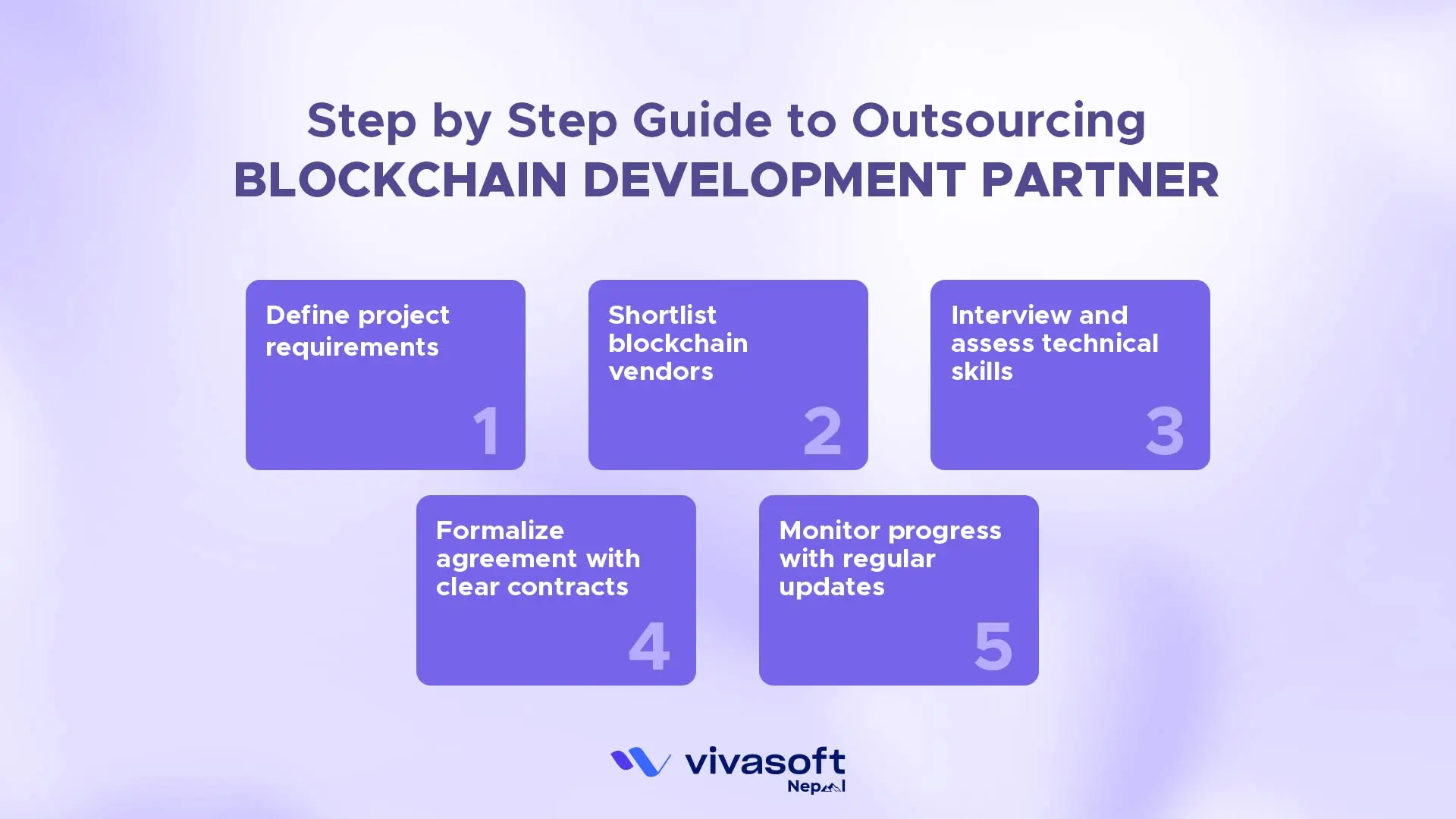
Define Project Requirements
Start with having a clear plan for your project. Note down what goals you want to reach, what features or functions you expect and which blockchain platform you want to use. When everything is clearly outlined, it saves both time and confusion later when you discuss with vendors.
Shortlist Blockchain Vendors
After you know what you need, start finding and shortlisting few blockchain vendors. Try to see their past works, what kind of clients they worked with and the tech they are expert on. A company that already handled similar type of projects is usually a safer and more confident choice.
Interview and Assess Technical Skills
Once you have your shortlist, talk with those vendors directly. Ask them how they handle smart contracts, DApps or integrations with Web3 tools. Also, see what frameworks they mostly use like Ethereum, Polygon, or Hyperledger. This gives you a better idea about their skill and how well they can fit with your project.
Formalize Agreement with Clear Contracts
When you decide on your final partner make everything clear in written agreement. The contract should mention deliverables, payment terms, milestones and ownership rights. Having this clarity helps avoid any misunderstanding later and keep both sides on same track during the development.
Monitor Progress with Regular Updates
Once the project starts, keep regular checks on the progress. You can use project management tools like Trello, Jira or Asana to track updates everyday. Having weekly or bi-weekly meetings helps stay connected with the team, catch issues early and make sure the project moves smoothly.
Final Thoughts
Outsourcing blockchain development services can be a real game-changer for businesses trying to innovate without overextending their internal resources. It allows companies to leverage global expertise, reduce costs, and achieve faster time-to-market, all while staying focused on their strategic goals.
But success really depend on picking the right partner who understand your vision, follow best practices and also align with your long-term business goals. If you are ready to take first step into blockchain, our team can help you from idea validation to blockchain audit & implementation. Let’s turn your concept into something real. Reach out today and let’s build future together.
FAQs
Why do companies outsource blockchain development?
By outsourcing blockchain development companies aim to reduce costs, accessing highly specialized skills, accelerate time-to-market and at the same time, to avoid the recruitment and training struggle of an in-house blockchain team.
What services are included in the blockchain development outsourcing?
Blockchain outsourcing services include smart contract development, blockchain consulting, custom blockchain solution, wallet development, integration and maintenance.
Is outsourcing blockchain development secure?
Yes, if it is properly done. Security can be maintained when the client chooses reputable providers following strong security practices, signing NDAs, conducting regular code audits and complying with data protection standard.
How long does a typical blockchain outsourcing project take?
Time required for projects of any kind is dependent on the range and complexity of the work. MVPs are usually accomplished within 3–6 months, where full enterprise solutions are most likely to take 9–12 months, so being implemented gradually with the customer continuously involved in the process and illustrating the product at the end of each sprint.
What is the key purpose of outsourcing blockchain development?
The key purpose of outsourcing blockchain development is to let the business comfort when they know that they can definitely rely on their core abilities while simultaneously leveraging specialized blockchain expertise, lowering costs and speeding up development without building everything in-house.